Turin, October 16, 2024 – The Maip Group is pleased to announce the official launch of the BIOntier research program (Breaking Frontiers in Sustainable and Circular Biocomposites with High Performances for Multisector Applications). This ambitious project, developed under the Horizon – JU Innovation Actions research programs of the European Union, aims to redefine the future of advanced biocomposite materials (BioC) through innovative and sustainable solutions.
BIOntier focuses on the development of new biobased biocomposites (BioC), which are renewable biological-origin materials with advanced properties and functionalities. These materials will be tested and validated in various real-world applications, spanning sectors such as automotive, aerospace, energy, and water treatment, reflecting the enormous potential of these materials in high-performance industrial fields.
The consortium brings together 25 prestigious participants from 12 different countries, including major OEMs (Original Equipment Manufacturers) like CRF Stellantis and Dawn Aerospace, leading Tier 1 suppliers like Faurecia, innovative SMEs like Maip Compounding, world-renowned research institutes such as the Fraunhofer Institute and RISE Research Institute, and several European universities and educational organizations. This highly qualified consortium will ensure excellence in the research and development of multifunctional biocomposites, representing the entire value chain to maximize the impact on the evolution of biocomposites.
BIOntier’s objective is to develop a new generation of recyclable, lightweight, sustainable, and highly competitive biocomposites. In collaboration with Stellantis Research Center and various Tier 1 suppliers, the project also aims to produce demonstrative components for the automotive sector, such as semi-structural aesthetic parts for vehicle interiors.
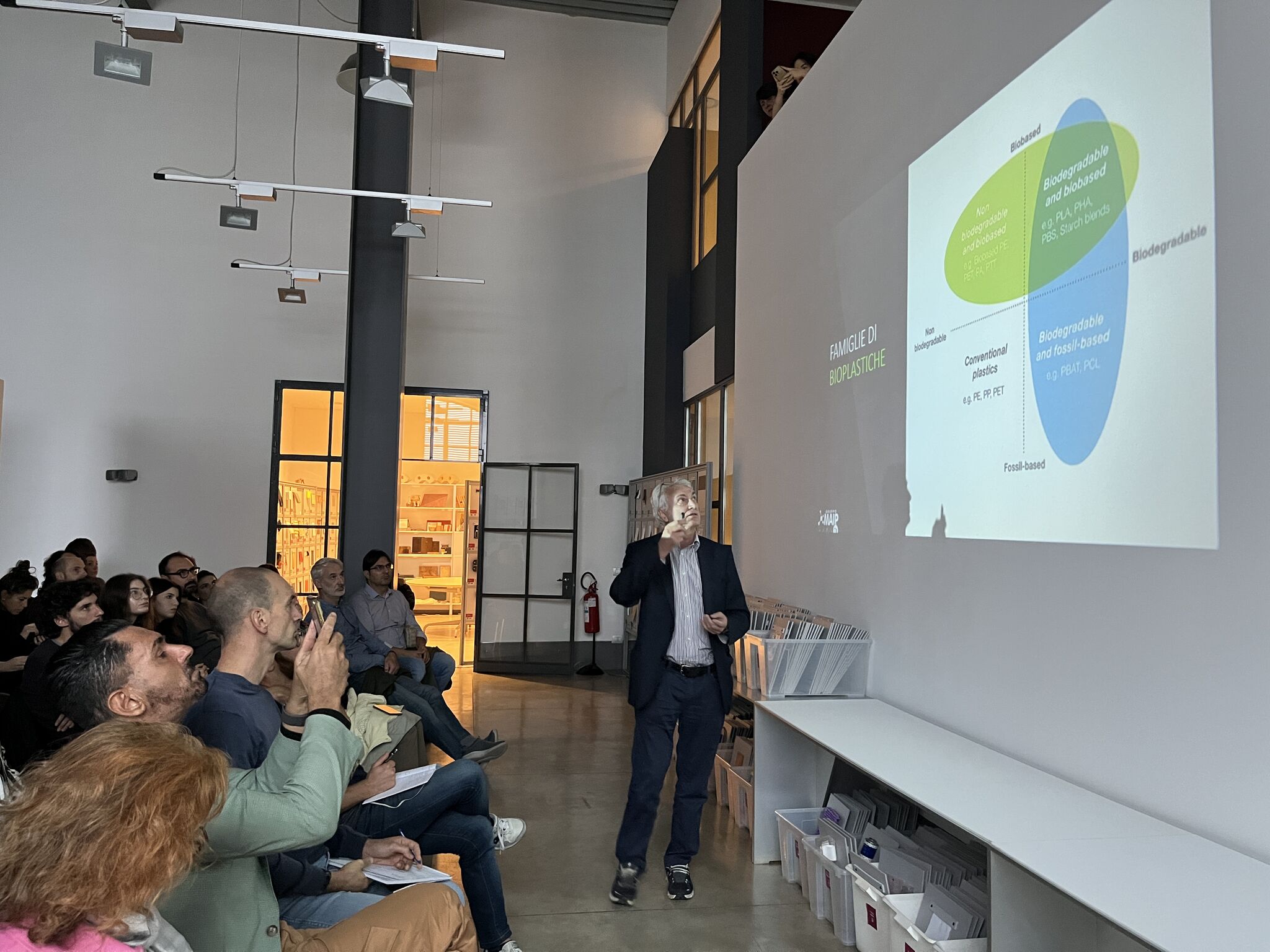
Among the selected materials integral to the project for the creation of these components, PHA (polyhydroxyalkanoates) stands out, a natural-origin biopolymer known for its extraordinary biodegradability and compostability characteristics. PHA is a material derived from renewable sources through biological fermentation processes, capable of naturally decomposing in all biodegradable environments.
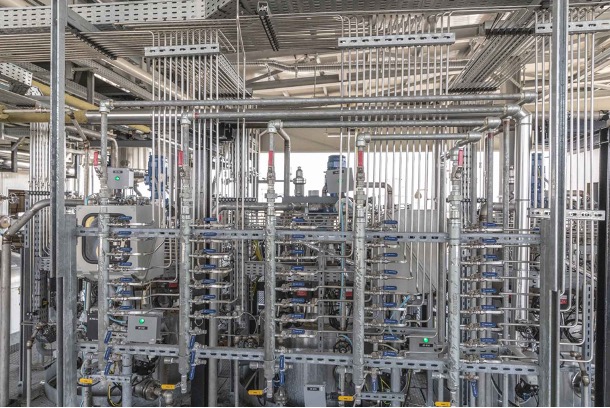
The Maip Group will lead the project in task 3.3, focusing on the production of innovative matrices and reinforcing fibers. PHA will be produced using technology developed by BIO ON, a subsidiary of the Maip Group, through its advanced fermentation technology with proprietary cell lines to generate high-performance biopolymers.
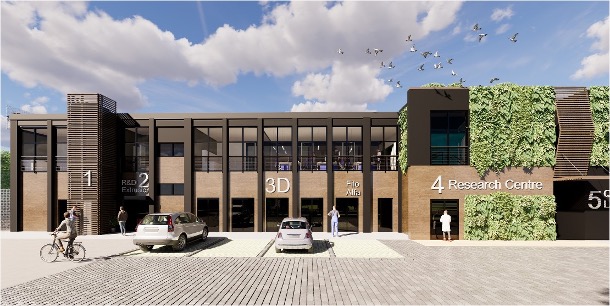
Maip’s Research Center will handle the formulation and production of PHA-based compounds, integrating additives, fillers, and modifiers to meet the strict standards required by the automotive industry. One of the most promising areas of research will be the integration of natural plant fibers into the materials, a step that will further enhance the environmental sustainability of the biocomposites. Incorporating these fibers will not only help reduce environmental impact but will also offer benefits such as recycling integration, simplifying the supply chain, and reducing production costs.
A key aspect of achieving these goals will be an in-depth study on the selection of powder produced at the Castel San Pietro plant and the subsequent modeling of the PHA-based compounding process. This study will focus on several critical factors, including the choice of additives, the types of reinforcements used, and the optimal dispersion of these components within the polymer matrix. Addressing these challenges will be essential to developing biocomposites with a bio-based content greater than 95%, while ensuring the performance required for these specific applications.
The BIOntier project represents a fundamental milestone in the Maip Group’s innovation and sustainability journey, following the operational restart of Zeropack, the joint venture between BIO ON and RKG – which recently unveiled innovative PHA component solutions for agriculture at the Fruit Attraction in Madrid – and the launch of the RAF (Recovery and Fermentation) pilot plant in Castel San Pietro with the production of the first batches of PHB Minerv by BIO ON.
The Maip Group continues, in line with the industrial plan approved after the acquisition of all BIO ON assets in June 2023, in the development and reconstruction of the highly innovative PHA sector project, originally initiated by BIO ON. This program, interrupted due to the well-known judicial events involving the company’s previous management, is now being relaunched with renewed momentum, aiming to leverage the technological and sustainable potential of PHA, which has been at the center of the Group’s technical focus for over 12 years.
The acquisition of BIO ON represents the most significant investment by the Piedmontese Group to consolidate its strategic vision of a sustainable future, coupled with the construction of one of the world’s most advanced and eco-friendly compounding plants in Settimo Torinese, with total investments for the two operations nearing €50 million.
According to engineer Martini, President of the Maip Group, “The acquisition of BIO ON marks a milestone in the development of biopolymers at a European level. A year after the acquisition, BIO ON has increased its value, determined not only by its vast production and research facilities but also by the company’s intellectual property, both in production processes and application and formulation patents.
The IP includes both existing patents (over 30 base patents) and those in the process of registration and filing in strategic sectors, such as cosmetics. These achievements confirm the Maip Group’s commitment to leading innovation and sustainability in the biopolymer market, a technology that is gaining a central role globally. It is no coincidence that a world-renowned scientist, Katrina Knauer, a polymer scientist (National Renewable Energy Laboratory, US), recently stated: “We would love to see a PHA-based future.”